

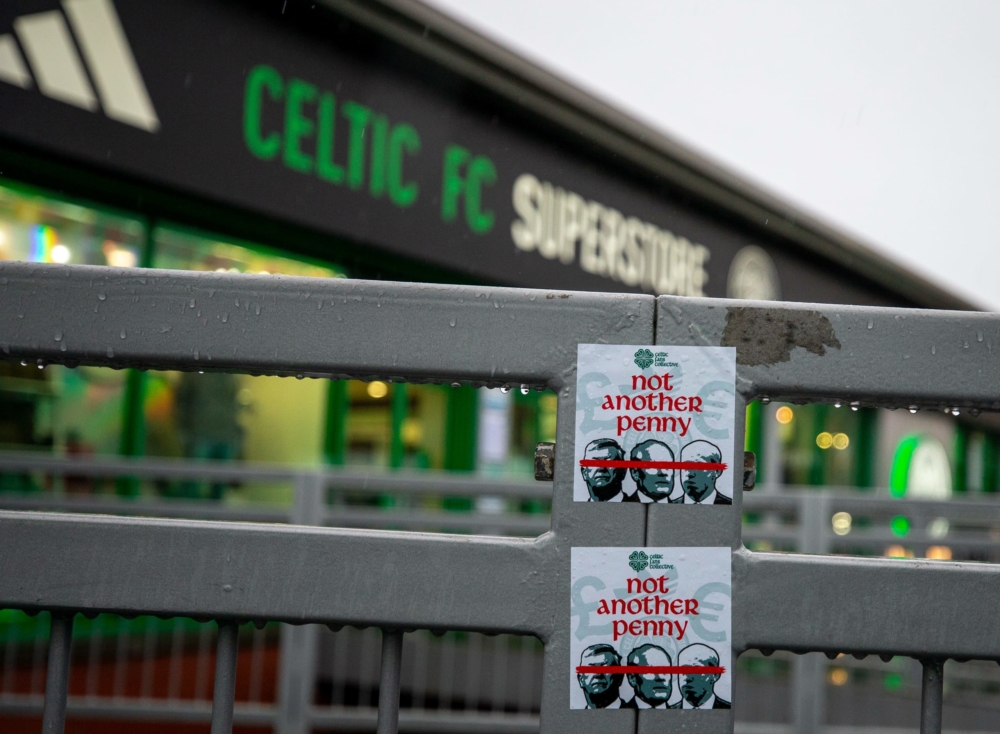
Few lines in English literature are more devastating than John Milton’s description of Satan in Paradise Lost. Cast out from Heaven, condemned to defeat, Satan consoles himself with a final act of pride. If he cannot possess paradise, he will at least possess power. Better an inferior kingdom that he controls than a superior one in which he must share authority.
It is a warning about a particular type of leadership. Not leadership that fails through incompetence. Leadership that fails because it cannot tolerate rivals, leadership that values control over achievement. Leadership that would rather dominate a diminished realm than surrender influence in pursuit of something greater.
THE CELTIC FAMILY- DESMOND & CO
For some Celtic supporters, that passage has become an uncomfortable way of understanding the modern history of their club.
Yet for much of Dermot Desmond’s tenure as the club’s controlling shareholder, Paradise has seemed curiously content with its limitations. Domestic dominance has masked persistent European underachievement. Elite managers have arrived, transformed the club and departed. Lessons have been repeatedly ignored. Temporary solutions have become permanent strategies. The overwhelming impression is not of a club relentlessly pursuing excellence, but of a club repeatedly choosing the safety of control over the risks required for genuine progress.
The strongest criticism of Desmond begins with Europe.
For all the domestic trophies accumulated during his tenure, Celtic’s record in qualifying for and competing in the Champions League remains profoundly disappointing. Individual failures can be explained away. Football is unpredictable and even the best-run clubs suffer setbacks. The problem is not that Celtic have occasionally failed. The problem is that they have repeatedly failed in remarkably similar ways.
Time and again the club has entered crucial European qualifying campaigns looking underprepared. Recruitment has been delayed until after decisive fixtures. Obvious weaknesses in the squad have remained unresolved. Managers have entered pivotal matches without the personnel they requested. Qualification is lost, explanations are offered, lessons supposedly learned and promises made.
Then the cycle begins again.
What is striking is not the failure itself but the club’s apparent inability to learn from experience. Successful organisations develop structures that prevent the same mistakes recurring. Celtic have often looked like a club trapped within a permanent state of improvisation, where every European disappointment is treated as an isolated event rather than evidence of a deeper structural problem.
For a club with Celtic’s resources, support and ambitions, that represents a significant failure of governance. Responsibility for governance ultimately rests at the top. It rests with Desmond.
The same pattern can be observed in the club’s relationships with managers.
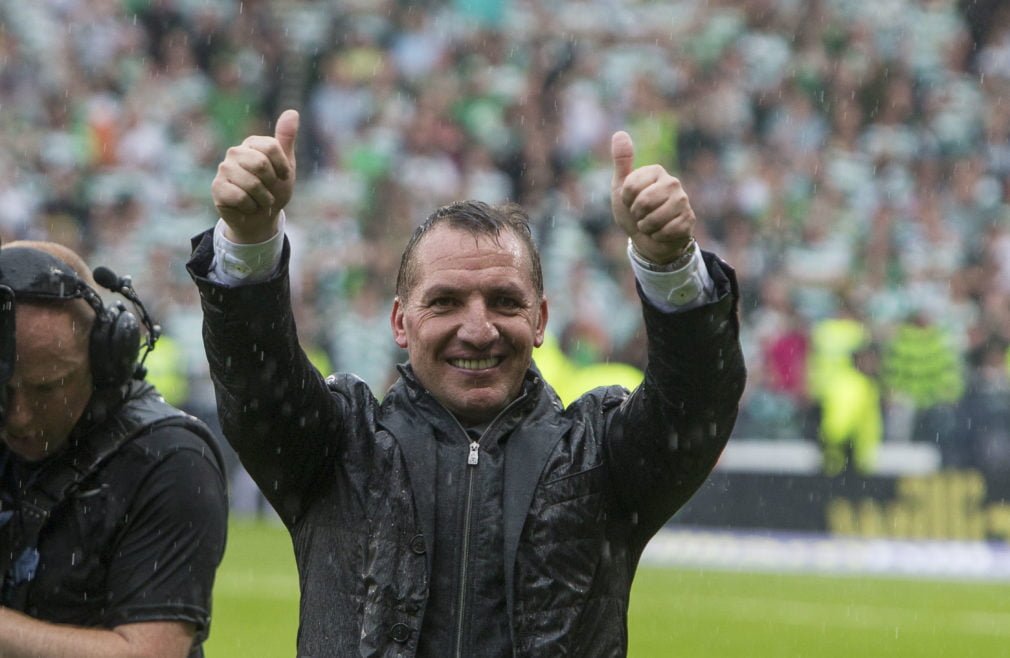
Celtic have twice, in recent years, identified coaches capable of transforming the organisation. Brendan Rodgers elevated standards throughout the club and delivered unprecedented domestic success. Ange Postecoglou inherited a club in turmoil and rebuilt its identity with astonishing speed. He restored excitement, improved recruitment and reconnected supporters with a clear footballing vision.
Both managers succeeded.
Neither manager stayed.
Of course, there are mitigating circumstances. Leicester City and Tottenham Hotspur offered opportunities that few coaches would reject. Scottish football cannot compete financially with the Premier League. Yet this explanation only goes so far. The real question is why Celtic repeatedly appear unable to create an environment in which elite managers believe their future lies at the club.
The answer may simply be economics.
Critics, however, suspect something more fundamental.
CELTIC- WHERE THERE IS A FEAR THAT SUCCESS COULD ASK AWKWARD QUESTIONS OF THE STATUS QUO
Rodgers and Postecoglou were not merely coaches. They were leaders capable of reshaping institutions. They possessed strong ideas, strong personalities and growing authority. Success inevitably increases managerial influence. Truly elite coaches do not simply operate within existing structures. They change those structures.
That brings us back to Milton.
Some supporters have come to believe that Celtic under Desmond are more comfortable with managers who fit within an established hierarchy than with managers capable of challenging it. From this perspective, the recurring friction between strong coaches and the club’s power structure is not accidental. It is an inevitable consequence of a model that prioritises centralised control.
Again, this is interpretation rather than fact. Yet it is an interpretation that helps explain a puzzling reality. Celtic repeatedly discover high-calibre managers. Those managers repeatedly improve the club. Those managers repeatedly depart before their projects reach full maturity.
The issue is not identifying talent.
The issue is living with the consequences of it.
This tendency may also explain the club’s repeated reliance on interim appointments.
Interim managers often enjoy immediate success because the circumstances are unique. Expectations are lower. Players receive a psychological lift. Supporters unite behind a familiar figure. Short-term improvement frequently follows.
The mistake is assuming that short-term success proves long-term suitability.
THE RETURN OF NEIL LENNON HIGHLIGHTS THE FEAR OF PUSHING BOUNDARIES
Neil Lennon’s appointment in 2019 remains the clearest example. Lennon successfully stabilised the club following Rodgers’ departure and delivered immediate results. However, the decision to make the appointment permanent reflected emotional momentum rather than strategic thinking. The subsequent collapse of the ten-in-a-row campaign exposed weaknesses that had been masked by the initial bounce.
The lesson should have been obvious, the skills required to rescue a situation are not necessarily the skills required to build an enduring elite football operation.
Yet Celtic’s leadership has often appeared attracted to familiar faces and reassuring solutions. Having benefited from successful interim appointments, the club seemed to convince itself that the success of the caretaker period automatically justified a permanent appointment. The distinction between solving a short-term crisis and building a long-term future became blurred.
That confusion reflects a broader weakness. Again and again Celtic have seemed drawn towards decisions that prioritise continuity, familiarity and control over ambitious strategic planning. Rather than seeking the disruptive challenge of elite leadership, the club has often appeared more comfortable with managers who fit the existing culture.
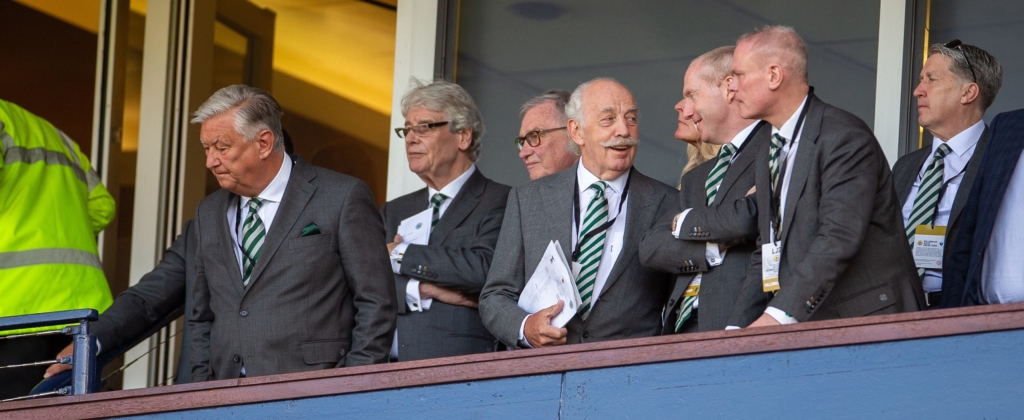
KEEPING THE HANDBRAKE ON AGAINST PROGRESS
That, ultimately, may be the central criticism of Dermot Desmond’s stewardship.
Celtic have never lacked resources. They have never lacked support. They have never lacked access to talented managers. Instead, they have often lacked the institutional self-awareness required to maximise those advantages. Recruitment failures recur. European disappointments recur. Managerial departures recur. The same problems emerge in different forms, season after season.
Every football owner makes mistakes. That alone cannot define a legacy.
What defines a legacy is whether those mistakes lead to learning.
For many supporters, that is where Desmond’s stewardship falls short. Domestic dominance has often disguised deeper weaknesses. Celtic have remained Scotland’s strongest club while consistently falling short of what their size, history and potential should allow them to become.
Which brings us back to Milton’s famous line.
Nobody seriously suggests that Dermot Desmond wants Celtic to fail. The accusation is more subtle than that. It is that for more than two decades he has built a club in which retaining ultimate control has too often been prioritised over creating the conditions for sustained excellence. Better to remain the undisputed power within a club that falls short in Europe than to share influence with the elite coaches capable of changing its trajectory.
It is impossible to prove. But it is increasingly difficult for many supporters to ignore.
RINSE AND REPEAT- THE CELTIC WAY
And so the great irony of the Desmond era is captured by the very book from which this article takes its name. In a stadium called Paradise, the club has spent years chasing ambitions that always seem just beyond its reach. Not because the talent was absent. Not because the resources were lacking. Not because the opportunities never appeared.
But because, at every critical moment, Celtic seemed more comfortable ruling a smaller kingdom than building a greater one.
Paradise, in other words, was not taken away.
It was lost.
Select Celtic365 as a “Preferred Source” on Google News for prompts to the independent news and opinions that you respect.
RELATED READING
CLICK HERE for five reasons supporters don’t trust Celtic Connect.
CLICK HERE for the Tickets still for sale for League Cup quarter-final as Ibrox fans walk away.


2 Comments
by Bhoy4life
The SPL became too easy for us to win.
Last season only reinforced that to the suits.
We have racked up 14 out of 15 titles pretty much as we pleased, which has only encouraged the board to penny pinch and protect their dividends.
Only when the shit hit the fan with CL qualification, which in most occasions should have been as near a certainty as you can get when assessing the opposition, did they start spending anything.
They waited till we had lost 40m to basically either net spend on profit or let a few mill go off the bank balance.
The problem has always been tho, who is identifying those buys?
We have been fortunate that we seem to be able to find at least one diamond we can move on for big money, but that’s the whole problem with the club, there is no future planning, no manager can build with a view to 3 or 4 years down the line.
It’s like a primary 7 school side that sweeps the board, all very well, but they will all be at the academy next season…what then?
There doesn’t seem to be any level at this club that operates in a professional manner, and that comes from the top down.
We all probably sound like entitled pricks considering the success we have had and where we sit in the league right now, but that’s not what irks most of the supporters.
The bone of contention is, we have enough resources, infrastructure and financial muscle to be far and away the super power in Scottish football for basically however long we want it.
But the question is…..do the suits actually want it?
Because they seem to behave in a way that they are happy just to barely keep our noses in front, almost behaving in a manner ti keep a certain other club relevant.
Nothing they do seems to have Celtic’s best interests at heart, we can’t even get a statement out of them when every corner of the media sends in the attack dogs, or when VAR and the refs are obviously directly impacting our results.
Are they muzzled by the 5WA? Or is MN and his cohorts just absolutely useless?
Either way, we need change…and we need it now.
Empty stadium folks……I will continue to shout this until the board is cleared out.
It’s the only thing that will get change.
by Mark
These performances we’ve seen under MON have been there since he was interim 1.0—misty-eyed pish blinded many to the truth. But the state of Celtic isn’t his can to carry fully either. Oh no, no, no… this is a Desmond & Co production, manufactured in the boardroom since Brendan Rodgers said in the Allianz Arena at full time: “I want us to be a seasoned club at this level.” The sheer cheek of it. That quote put it all on those in the directors’ box—they had to deliver, or else he wasn’t the right man for the job.
They never did, and in Desmond’s twisted world, it was Rodgers’ fault. End of. Period.
When you systematically dismantle the engine room of a club—stripping out 25 years + of institutional memory (John Kennedy for starters) letting proven coaches walk out the back door without a fight, and attempting to run a modern first-team operation on cheap shortcuts—this is the exact outcome.
You cannot gut the tactical setup of a modern football club and expect the machine to keep running on autopilot. Modern players need detailed instructions, proper video analysis, and clear structure on the training pitch. Throwing players out onto a European stage with vague demands to “show grit” or “win your battles” is administrative negligence.
FIFA have weekly webinars with coaches from all over the world discussing every level of the game bar “heart, fight, desire, blooter, long baw, heid it, hawf the cunt.”
Celtic’s display tonight was a disaster. I have never witnessed a performance so abject—or at least, I don’t think I have. Forget LASK away, the huns, etc. What was shown tonight was worse because at this point, we’ve had a full pre-season and a transfer window, and the team had a few pumpings before last night. The manager had all the information he could possibly have about every negative and positive in his squad, what hasn’t worked, and what could work. He said he’d learn, and the proof was more shocking than I could imagine.
That’s why it’s the worst: because of the context. What we know has gone before from pre-season to now. There is no excuse to be as fuckin mental and oblivious as he has been. Old age? No. Dinosaur? No. Protecting his paymaster? Absolutely. Because he had the transfer window and saw the squad requirements, yet sat and said he was happy with it just so he wouldn’t upset Desmond and co. Fuck right off.
* Zero Pressing Cohesion: The front three pressed individually, leaving huge, gaping pockets in the central third for Ferencváros to turn and play straight through.
* The Death of Line-Breaking Passes: Without automated movement from the interior midfielders to draw markers away, the defenders had no options other than “safe”, sideways passes or aimless long balls into no-man’s-land—or shark-infested waters!
* Transition Collapse: The moment possession was turned over, Celtic had no structural safety net. Ferencváros broke with ease because nobody knew who was responsible for sweeping up second balls or cutting off counter-attacking angles.
Tonight proved beyond a shadow of a doubt that “getting back to basics” is a myth in modern European competition. The game has moved past simple motivation and individual talent—it is governed by structure, tactical discipline, and clarity on the pitch.
Celtic are currently trapped in the worst of all worlds: defensively fragile, offensively predictable, and completely stripped of the high-intensity possession identity that defined the club’s most successful modern eras. Until there is a total realignment from the top down—one that respects modern tactical preparation, invests properly in elite backroom infrastructure, and demands uncompromising standards on the grass—nights like tonight will continue to be the rule rather than the exception.
More of the same on Sunday then, lads.