

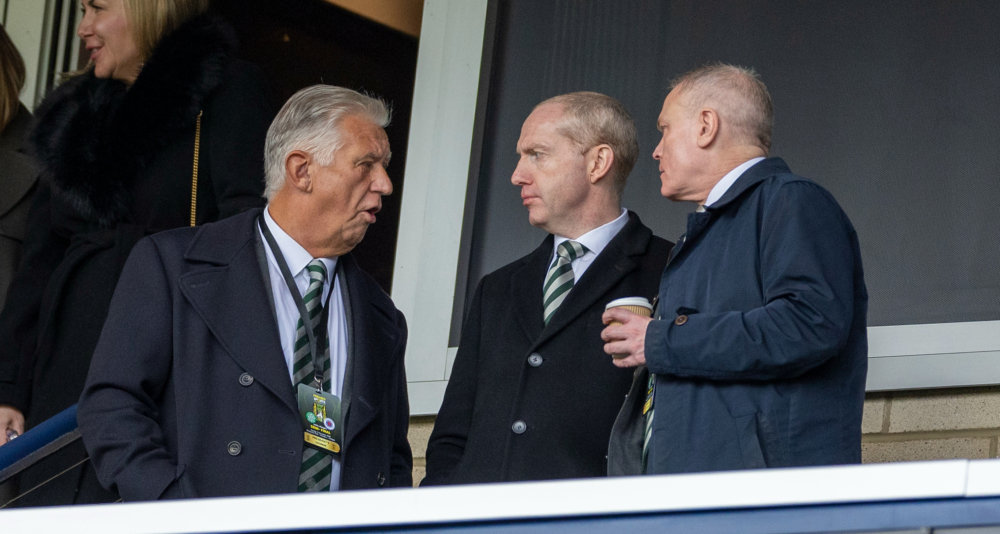
Celtic’s greatest weakness is not on the pitch. It is not recruitment. It is not managerial instability. Celtic’s greatest weakness is the boardroom cartel that has spent years protecting itself at the expense of the plc, the football club, and the supporters.
The directors who run Celtic have built a culture where loyalty to each other outweighs loyalty to Celtic. Decisions are made not on merit, not on strategy, not on ambition — but on preserving the hierarchy.
This is not governance. It is cronyism. And it is killing Celtic’s potential.
Lawwell’s Outrageous Celtic Return: The Ultimate Symbol of Boardroom Self‑Preservation
Nothing exposes the rot more clearly than the outrageous return of Peter Lawwell as Chairman. Lawwell’s departure as CEO should have been the end of an era defined by strategic complacency, European failure and extravagant remuneration. His tenure culminated in the catastrophic failure to secure 10 in a row, a collapse that was entirely avoidable and entirely predictable.
Lawwell oversaw:
- A recruitment model that collapsed under pressure
- The refusal to modernise football operations
- A disastrous loyalty to Neil Lennon long after the season was dead
- A breakdown in communication with supporters
His exit should have been final. Instead, the board brought him back —promoted him, even — as Chairman. This was not a decision made in the interests of Celtic. It was a decision made in the interests of the boardroom clique that has run the club for decades.
Lawwell’s return was a message that the board protects its own, no matter the failures, no matter the consequences.
Dom McKay: Removed for Daring to Modernise
If Lawwell’s return was the boardroom’s self‑congratulation, the ejection of Dom McKay was its self‑defence. McKay arrived with a mandate to modernise Celtic — to drag the club into the 21st century, overhaul outdated structures, and introduce professional standards that matched Celtic’s size and ambition.
He lasted a total of 72 days. He is now CEO of the SEC which includes the Hydro, staging events and entertainment 52 weeks of the year. Their gain, Celtic’s tragic loss.
And the boardroom cartel removed him.
The official explanation was vague. The real explanation was obvious: McKay was not “one of them.” He was not part of the inner circle. He was not willing to rubber‑stamp the old model. So he was pushed out before he could change anything.
Celtic lost a moderniser because the board feared modernisation.
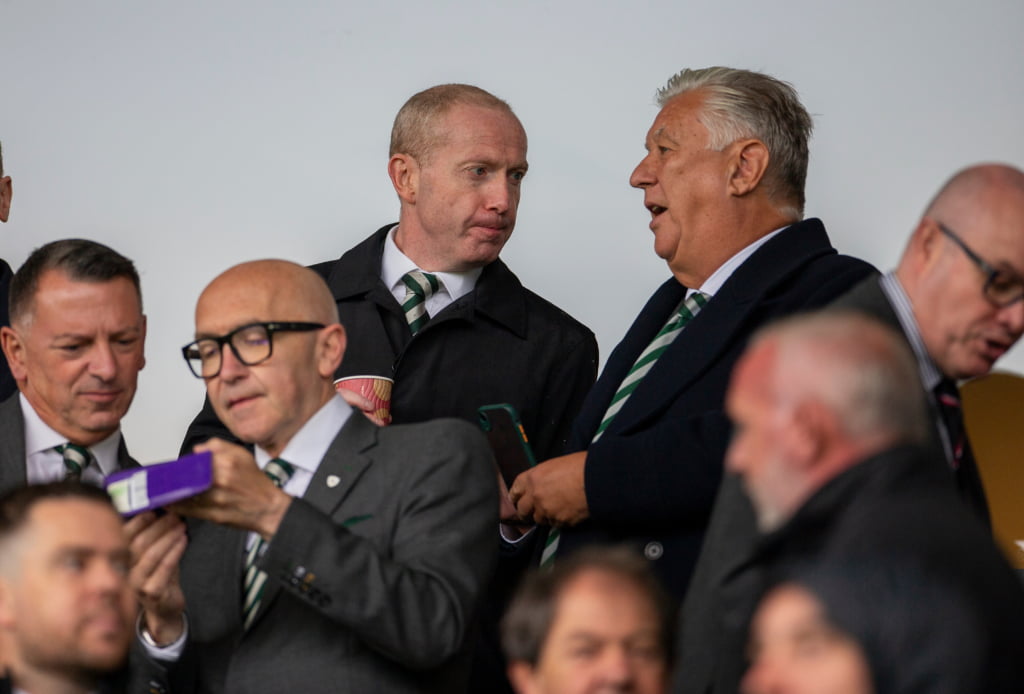
Michael Nicholson: Promoted Because He Won’t Challenge Anyone
After removing McKay, the board needed someone who would not challenge them. Someone who would not modernise. Someone who would not question the hierarchy, someone loyal.
They chose Michael Nicholson.
Nicholson’s promotion was clearly not based on leadership ability, strategic vision, or public communication skills — all of which are essential for a CEO of a major football club. It was based on one thing- he is safe. He is compliant, he is part of the old guard. He will not disrupt the boardroom cartel.
Nicholson’s public presence is almost non‑existent. He rarely speaks. When he does, it is scripted, wooden, and evasive. Supporters have been left with a CEO who cannot communicate, cannot inspire, and cannot articulate a vision for Celtic’s future.
This is not leadership. It is maintenance. It is the boardroom protecting itself by appointing someone who will never threaten its power.
Neil Lennon: Protected Until the Season Was Dead
The most damaging example of Celtic’s boardroom cronyism came during the failed pursuit of10 in a row. Neil Lennon should have been removed months before the season collapsed. The warning signs were glaring:
- Tactical chaos
- Dressing‑room unrest
- Repeated humiliations
- A complete collapse in form
- A fanbase begging for change
Yet the board refused to act. Why? Because Lennon was one of their own. He was part of the inner circle. He was protected not because he was succeeding, but because he was loyal.
This loyalty — sentimental, irrational, and professionally negligent — cost Celtic the most historic achievement in modern Scottish football. It cost millions in revenue, it cost credibility. It cost momentum, it cost trust.
The boardroom cartel chose loyalty to Lennon over loyalty to Celtic.
A Celtic Board That Serves Itself, Not the Club
The pattern is undeniable:
- Lawwell returns despite failure.
- McKay is removed for challenging the hierarchy.
- Nicholson is promoted for loyalty, not competence.
- Lennon is protected long after the season is lost.
This is not coincidence. It is culture. It is the boardroom’s operating model.
Celtic plc is run like a private club, not a public company. Directors protect each other, recycle each other, promote each other, and shield each other from accountability. The interests of the football club — the team, the supporters, the shareholders — are secondary.
Cronyism has become Celtic’s biggest competitive disadvantage.
No Progress without radical change
Celtic is a giant of a club with global potential. But as long as the boardroom remains a closed circle of self‑preserving loyalists, Celtic will continue to repeat the same failures. The club will remain stagnant, reactive, and strategically incoherent.
Loyalty to each other outweighs any loyalty to Celtic. Protecting the hierarchy has replaced protecting the club. Cronyism has replaced ambition.
Until this culture is dismantled, Celtic will remain trapped — not by rivals, but by its own leadership.
Select Celtic365 as a “Preferred Source” on Google News for prompts to the independent news and opinions that you respect.
RELATED READING
CLICK HERE for five reasons supporters don’t trust Celtic Connect
CLICK HERE for Celtic had two options with Engels- they chose neither
1 Comment
by William Kinney
Great read , you can put into words what I’m thinking, shame it will fall on deaf ears , the collective has good intentions but we or they are going at a snails pace & unfortunately I fear it will not put one dent on this inner circle of incompetents , we really need another Fergus McCann to come foward 🤞